Published
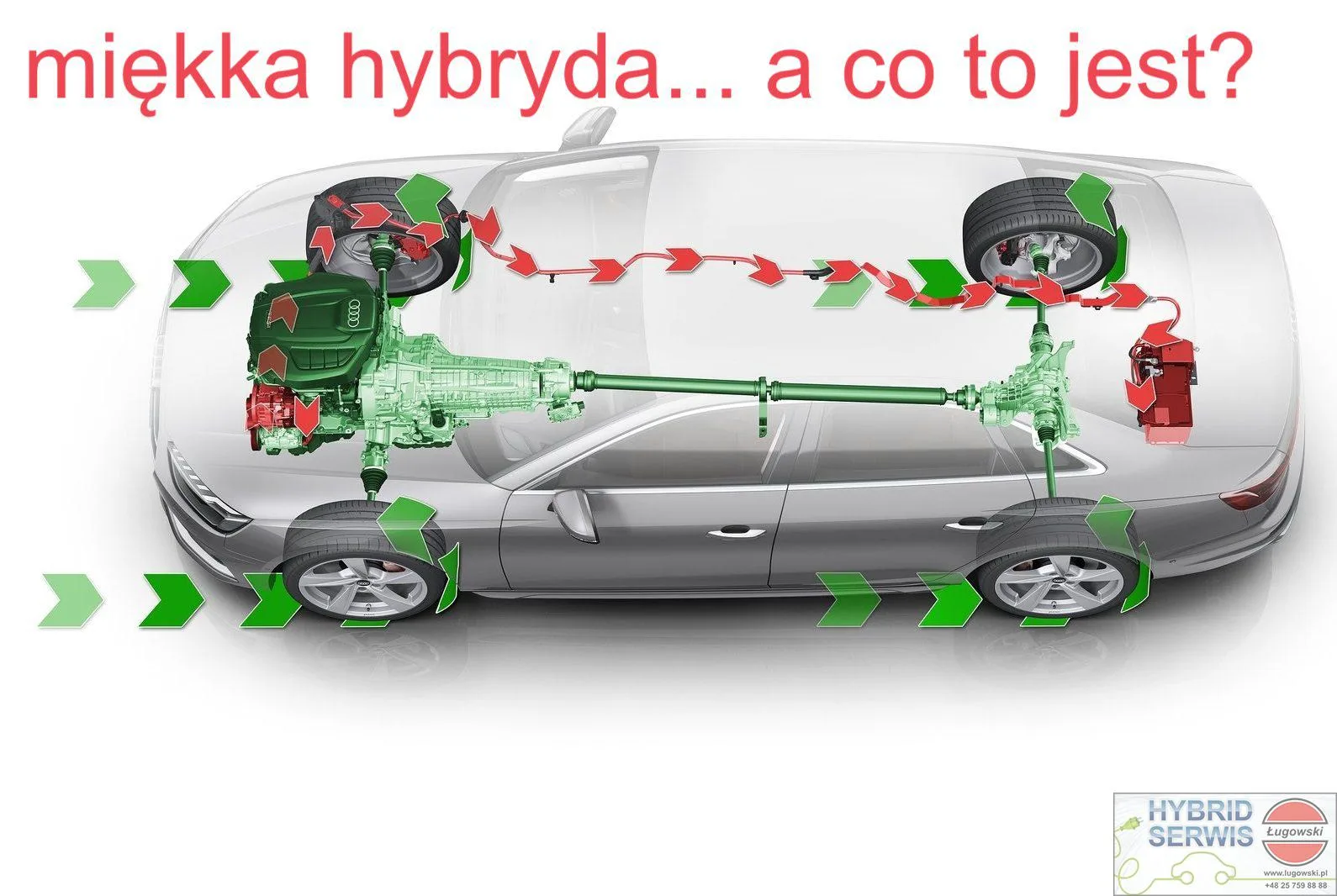
Mild Hybrid, the so-called soft hybrid, is a group of hybrid drivetrain solutions that we deal with in our everyday work.
Restrictions on harmful emissions force manufacturers to use solutions that meet these standards. Today, almost every car manufacturer offers model versions in a mild-hybrid configuration. Interestingly, one of the few — and probably the most significant on the mass market — is Japan's Toyota. It has no intention whatsoever of introducing mild-hybrid solutions into its lineup. It seems that Toyota focuses on "full" hybrids, refining the technology and reliability I mentioned in the previous post.
So what actually distinguishes a mild hybrid from a full hybrid? Thinking about the simplest answer, I came to the question of how a mild hybrid differs from a full one. The answer boils down to three words: less, weaker, cheaper.
Less voltage in the system: 12-48V – a low-voltage installation that requires no special certifications, can transfer lower power, and is significantly cheaper.
Smaller battery capacity: This means a lighter construction, less usable charge, and cheaper cells.
A weaker electric motor: Lighter, usually does not allow driving in purely electric mode at all, and is significantly cheaper to make.
I want to emphasize that cheaper doesn't mean bad. For manufacturers obligated to meet stringent emission standards, these designs have become a loophole through which vehicles only slightly more expensive than pure combustion cars can pass.
The advantages of this type of drivetrain are mainly worth looking for in the city. It also wouldn't be too far off to call mild-hybrid technology another generation of the START/STOP system. Its main task is precisely to start the combustion engine and add a bit of extra power when pulling away, and such help is especially needed in city traffic jams. That's where the mild-hybrid drivetrain pays off with lower fuel consumption and smoother operation compared to a purely combustion car, while during normal driving it gives practically no savings. It's worth remembering that manufacturers often offer the same models in full-hybrid (plug-in) or purely electric versions, and it's precisely these that, besides greater advantages in the city, also add economy during normal driving. Of course, more, stronger, bigger — all of that has its price, visible in the catalog. Mild-hybrid technology, which can be cheaply adapted to existing combustion-engine designs, has become the cheapest solution for most manufacturers. It's not up to us to judge the merits of using these solutions; our job as a specialist workshop is to stay up to date and be able to repair various types of drivetrains.
On the practical side, I'll list solutions here using manufacturers from across our western border as examples: Volkswagen (VW), Audi, and Mercedes with their Mild Hybrid solutions. The basic actuating components in a mild hybrid don't differ from those in full hybrids. These are: the battery, inverter, electric motor/generator, and additionally a 12V DC-DC converter. It's worth noting that a 12V voltage is present in every type of drivetrain, including fully electric ones. This voltage powers all the logic and actuating components – it has existed for almost 100 years, since the introduction of the 12V system in the 1930s. Additionally, in a mild hybrid the air-conditioning compressor is electrically powered, which allows it to keep running while stuck in traffic with the engine off. Power steering assistance and often the coolant pump are also electrically driven.
AUDI system:
AUDI offers a wide model range, including the A4, A6, A8, D5, A7, Q7, and Q8.
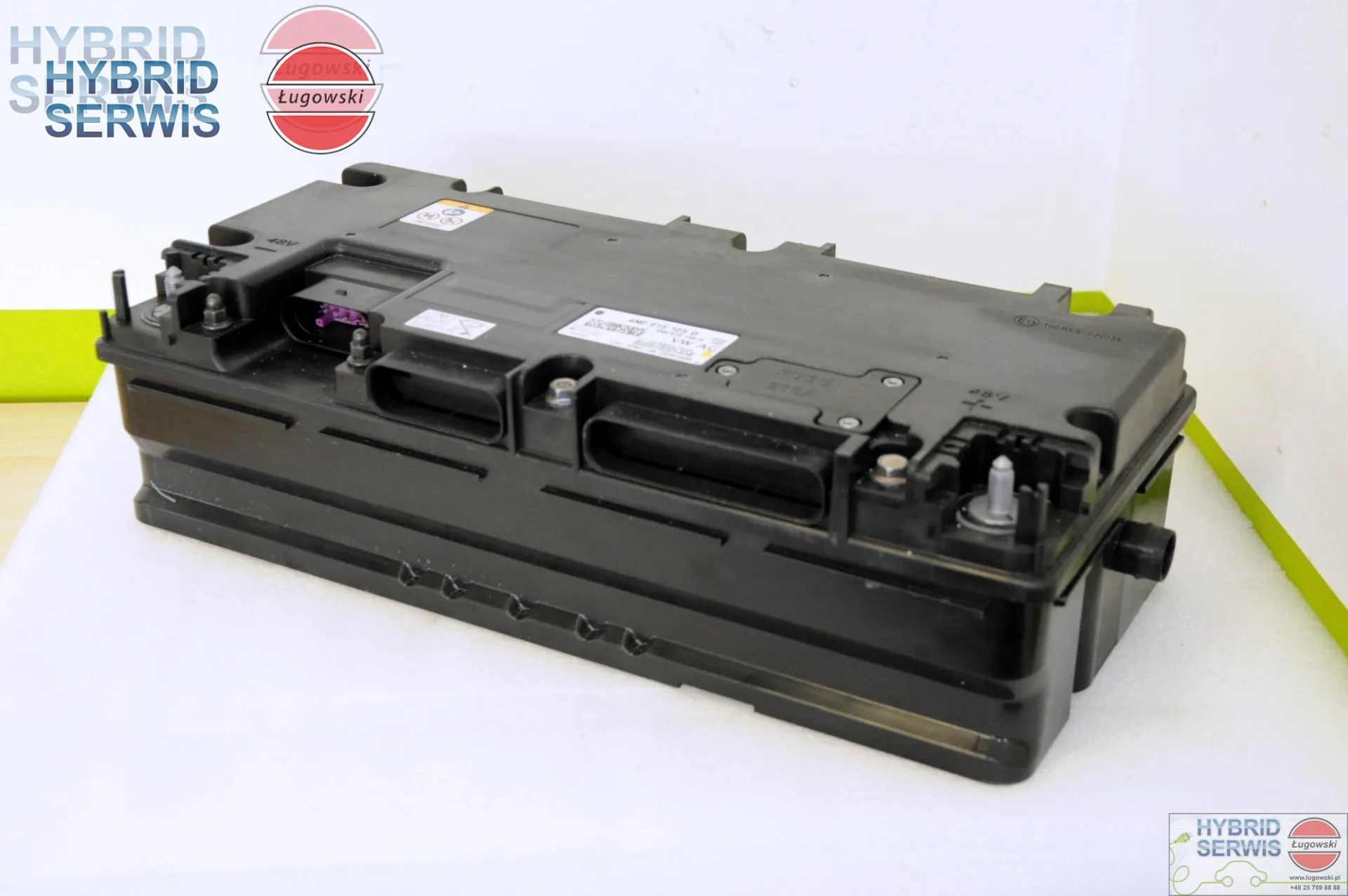
1. 48V AUDI Mild Hybrid battery 4N0915105 (D) / B C F:
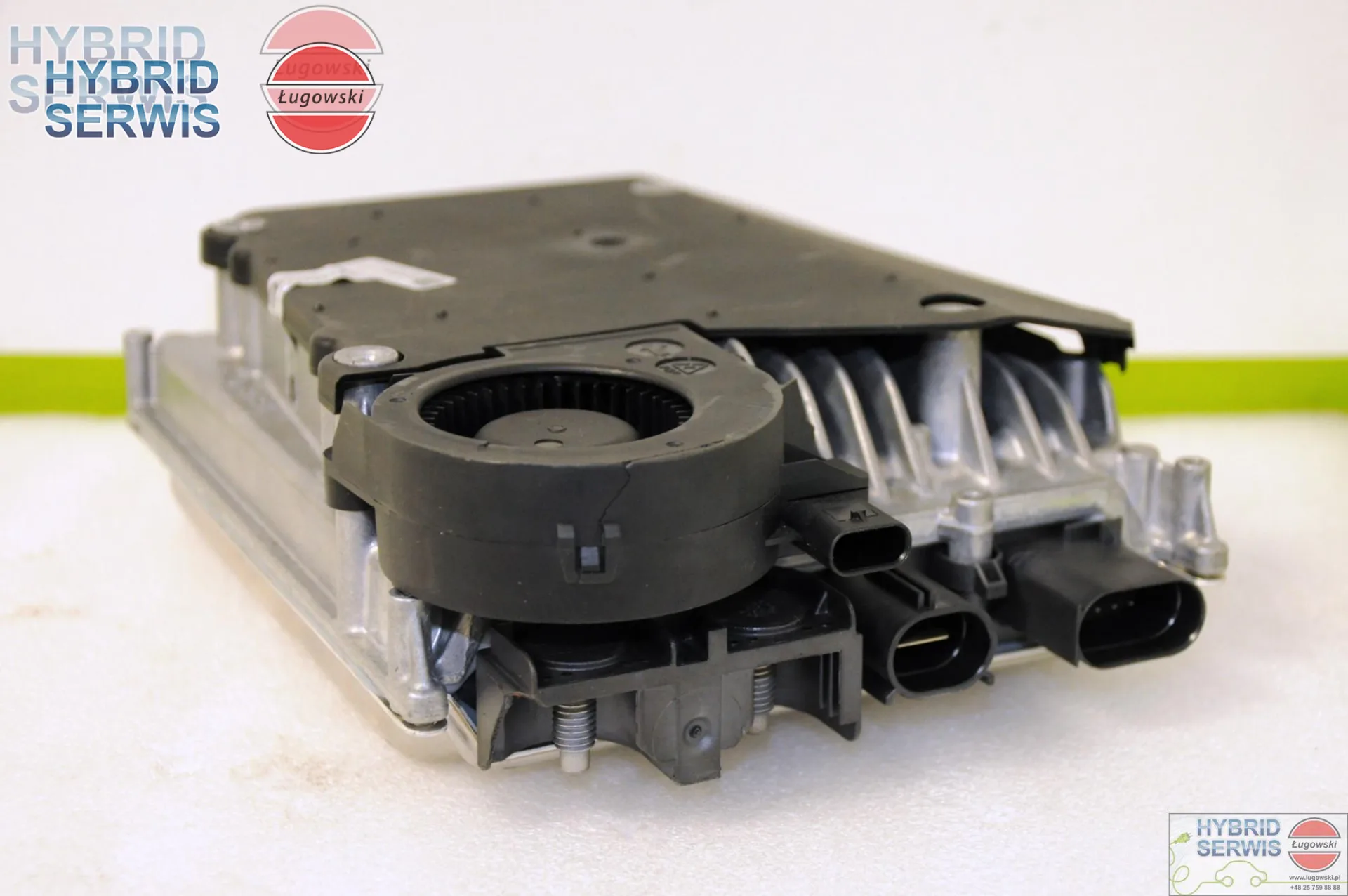
A 48V lithium battery enclosed in a single housing. Control electronics with contactors and an air-cooling system with small fans.
https://www.lugowski.com.pl/.../bateria-48v-audi-a6-a8-d5...
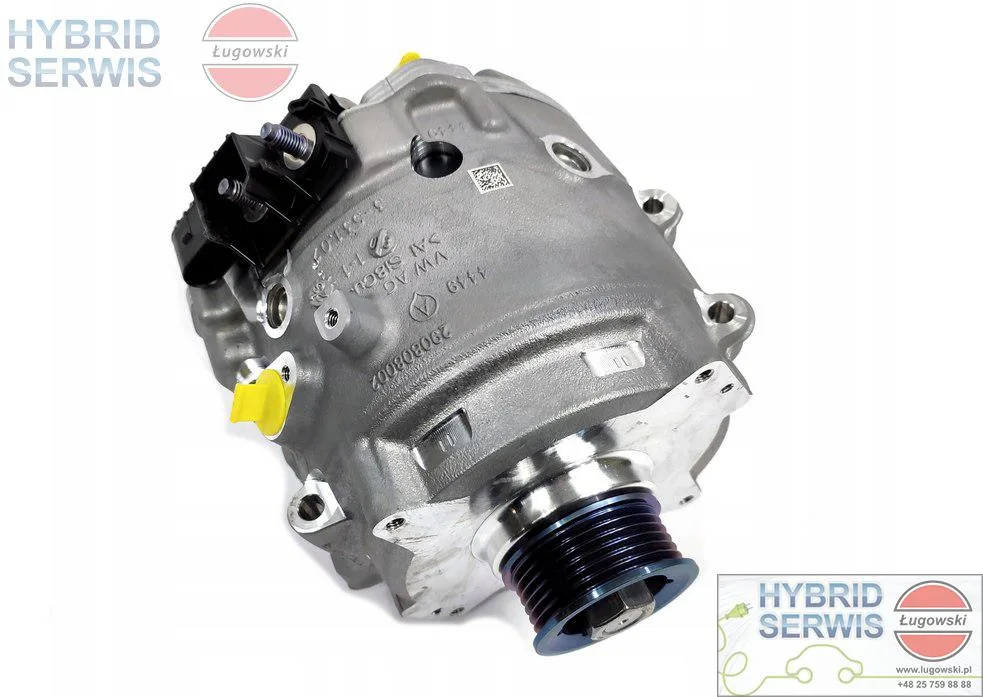
2. Alternator/starter/electric motor 4N0903028 ® / M J N P:
The motor is housed in a single unit with a built-in inverter and control electronics. It works together with the electric motor via a belt. It also acts as a generator, recovering energy during deceleration or moderate braking.
https://www.lugowski.com.pl/.../alternator-rozrusznik-48v...
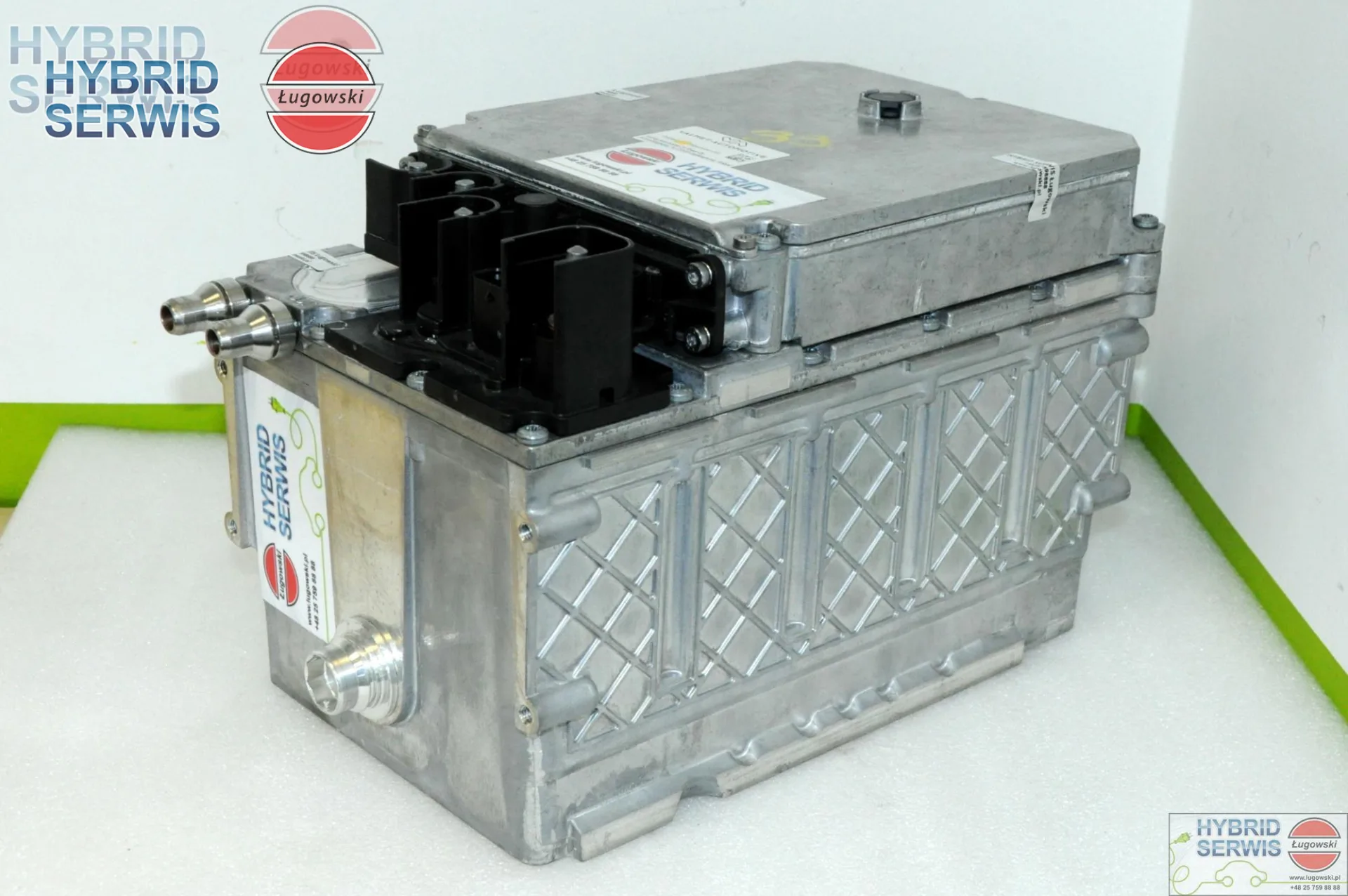
3. 48V/12V DC/DC converter, mild hybrid, 4M0959663 © / B D E:
The 48V/12V voltage converter manages the voltages in both electrical circuits; these are separate circuits with no shared ground.
https://www.lugowski.com.pl/.../przetwornica-48v12v-dcdc...
We have the experience and dedicated tools to diagnose and test components from this Audi mild-hybrid system.
Mercedes' mild-hybrid system is called: EQ Boost. This is a second-generation 48V mild-hybrid version, used, similarly to Audi, across a wide range of models: C(205) E(213) E coupe, E cabrio(238) GLC(253) CLS(257) GLE, GLS(167) S(222) AMG GT (209)
1. Battery – has an integrated DC/DC converter, 48V/12V, A000982031
A0009820216 A0009820316 A0009823317 A0009823413 A0009823417 AA09823513 A0009823516 A0009824420 A0009824520 A0009825213 A0009825313 A0009826222 A0009826714 A0009826814 A0009827116 A0009827216
https://www.lugowski.com.pl/.../naprawa-baterii-mercedes...
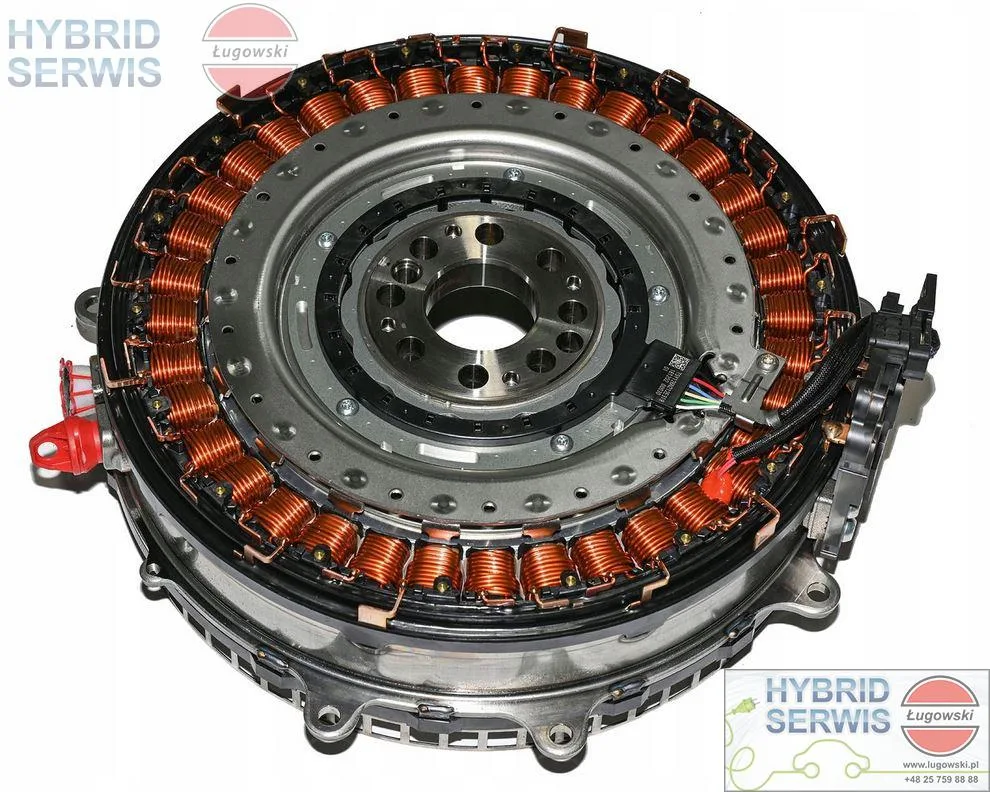
2. Mercedes uses the A2569060000 motor, mounted on the shaft axis with the ISG gearbox, which gives a direct connection to the combustion engine. Similar to Audi, driving on the electric motor alone is not possible, but drive assistance, especially in coasting mode, can be somewhat more noticeable.
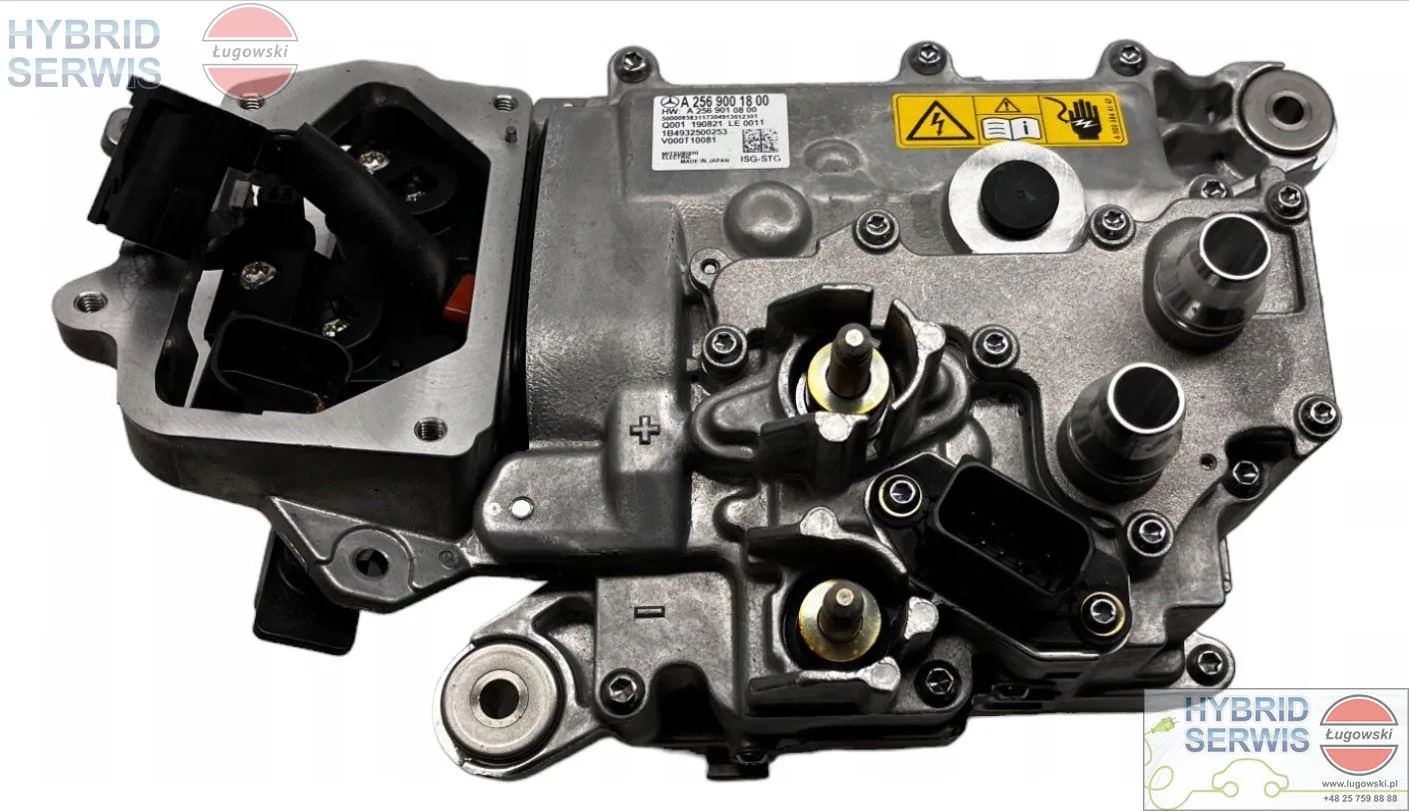
3. The Mercedes A2569001800 EQ Boost inverter, similarly to classic hybrids, is installed as a separate component of the system.
Manufacturers often serve us technological changes and introduce new hybrid systems. We approach these solutions with interest and curiosity, and, in a sense, a side effect of our passion is the ability to repair them. We invite you to our workshop with this or any other issue affecting your vehicle.