Published
Today's post is about the chemistry behind the batteries of electric and hybrid cars. However, it's not about our stance on electrification, since I feel that's been talked about more than enough in the media lately. This post will cover the various generations of batteries used in the automotive industry. Abbreviations like NiMH, LFP, and NMC can confuse even people connected to the industry. Cell manufacturers don't make things easier, introducing new generations faster than Google rolls out the next Android update.
The history of introducing hybrids on a mass scale is closely tied to Japan. Until recently, if you asked someone on the street which hybrid car they knew, they would most often answer "Toyota Prius." That association became almost as ingrained as "Adidas" among sports shoes. Toyota has in fact been developing its technology since 1997, when the first generations of this hybrid went on sale, giving it nearly 30 years of experience in building batteries. Notably, from the start of hybrid production until the end of the fourth generation in 2023, Toyota developed Ni-MH battery technology, i.e. the nickel-metal hydride battery. This refined technology has proven reliable enough to be used across the entire range of both Lexus and Toyota hybrid models. For Toyota, an emphasis on reliability has always been a priority, which is why winning reliability awards comes as no surprise. The manufacturer also gives users a clear signal about the longevity of these solutions; from the start of production, it has offered a 10-year warranty on the battery.
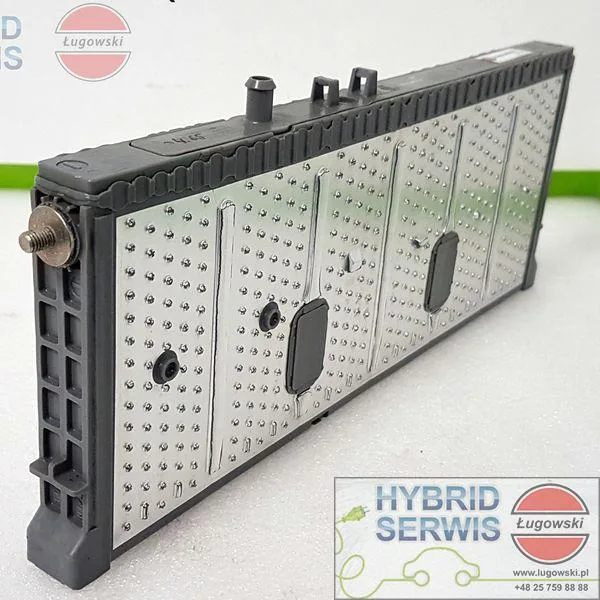
The Lexus/Toyota battery module fits most models of these cars from the early 2000s to 2023.
The G9280-47011 Ni-MH is a nickel-metal hydride module with a rated capacity of 6.5Ah, made up of 6 cells at 1.2V - the module's rated voltage is 7.2V, its energy content is 46Wh, and it weighs exactly 1kg.
https://www.lugowski.com.pl/.../toyota-hybrid-lexus...
I won't hide the fact that for us as a workshop, this technology, refined over years across successive model generations, makes it easier to access functioning battery components on the secondary market, which translates into lower costs for the customer. There's nothing to stop a 2nd-generation Prius from 2003 from having modern 2020 cells from a different model installed, which greatly extends the vehicle's life.
Honda followed Toyota's lead in 2001, producing the Civic VII IMA hybrid, also based on a Ni-MH battery. Like Toyota, the Japanese manufacturer extended its Ni-MH cells to a wide range of IMA hybrid models, i.e. Integrated Motor Assist, including the Insight, Jazz, CH-R, CR-Z, and CR-V. As with Toyota, there are enough parts available to repair worn batteries, which also feature good durability.
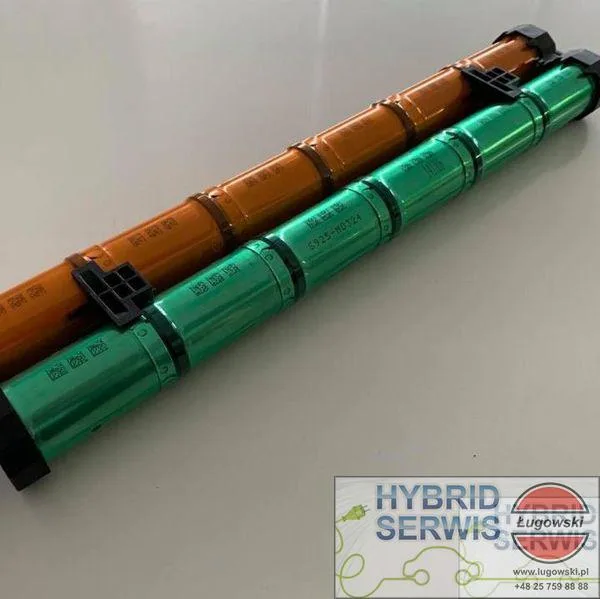
1E100-RMX-0331 is the HV battery cell of the Honda Civic IMA.
https://www.lugowski.com.pl/.../ogniwo-baterii-hv-honda...
In 2011, the French manufacturer PSA joined this group, introducing hybrids based on Ni-MH cells paired with a diesel-powered 2.0 HDI unit, such as the Peugeot 3008 HYbrid4, Peugeot 508 RHX HYbrid4, and Citroën DS5 HYbrid4.
The PSA Hybrid4 HV hybrid battery cell fits the Peugeot 3008, 508 RHX, and Citroën DS5 models.
https://www.lugowski.com.pl/.../ogniwo-bateria-hybrydowa...
Starting with the fifth-generation Prius from 2023, as well as in other models, Toyota is introducing hybrid drivetrains powered by lithium batteries. This marks the end of a certain era of using nickel-metal hydride cells in the automotive industry.
I'll try to shed some light on the confusion surrounding lithium battery chemistry in the next post.
Photos1